What does 45% heart function mean?
55 to 70% – Normal heart function. 40 to 55% – Below normal heart function. Can indicate previous heart damage from heart attack or cardiomyopathy. Higher than 75% – Can indicate a heart condition like hypertrophic cardiomyopathy, a common cause of sudden cardiac arrest.
What EF is considered severe heart failure?
Normal EF is in the range of 55% to 70%. As the percentage falls, it tells the doctor that the heart failure is getting worse. In general, if the EF falls below 30%, it's relatively severe. A reading of 20% or below is very severe heart failure.
What is the lowest ejection fraction you can live with?
If you have an EF of less than 35%, you have a greater risk of life-threatening irregular heartbeats that can cause sudden cardiac arrest/death. If your EF is below 35%, your doctor may talk to you about treatment with an implantable cardioverter defibrillator (ICD) or cardiac resynchronization therapy (CRT).
Is an ejection fraction of 45 50 good?
Many doctors consider a normal ejection fraction to be 55% to 75%. If yours is 50% or lower, it's a sign that your heart -- usually your left ventricle -- may not pump out enough blood.
What Is Ejection Fraction And Its Link To Heart Failure?
What does an ejection fraction of 45 mean?
A low ejection fraction (or low EF) is typically 45 or less and can be evidence of heart failure or cardiomyopathy (a disease of the heart muscle). The heart's ejection fraction (EF) refers to the amount – or percentage – of blood pumped (or ejected) out of the heart's left ventricle with each contraction.
What is a normal ejection fraction for a 60 year old?
An ejection fraction of 50 percent to 65 percent is considered normal.
Does walking improve ejection fraction?
Official answer. Exercise including walking can improve ejection fraction if it is done 3 to 5 times per week for at least 20 to 40 minutes per session at a moderate-intensity pace, but it must be built up gradually.
Can EF be improved?
Luckily, lifestyle changes and heart failure medicines can help improve your ejection fraction and even reduce symptoms. Your ejection fraction is the percentage of blood that gets squeezed out of the ventricle with each beat. A healthy ejection fraction is around 50 to 70 percent.
Does a pacemaker increase ejection fraction?
Biventricular pacemaker is a special pacemaker, which is used to synchronize the contractions of the left ventricle with the right ventricle, to improve the ejection fraction in patients with severe and moderately severe symptoms of heart failure.
What does 40 percent heart function mean?
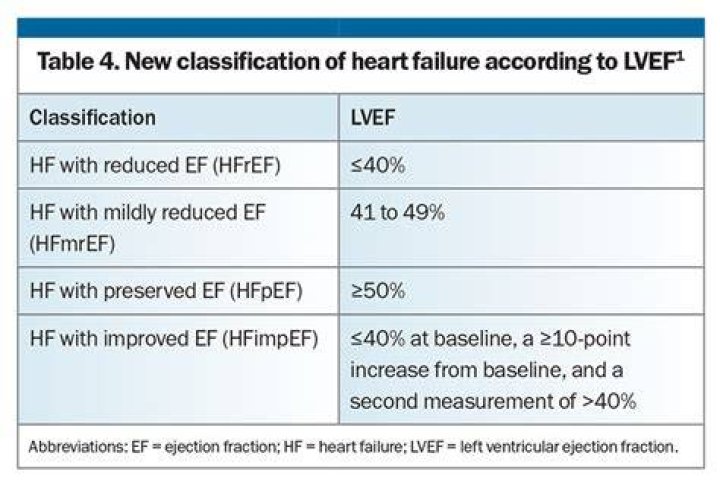
An ejection fraction of 40 percent or less might be evidence of heart failure. If it is 41–49 percent, it might indicate borderline heart failure, but not necessarily; other conditions, such as a heart attack, can also reduce ejection fraction.
How long can you live with low EF?
Conclusion: Three year survival is low when ejection fraction is very low. However, once the ejection fraction is
What is the lowest percentage your heart can function at?
The left ventricle is the heart's main pumping chamber. It pumps oxygen-rich blood up into your body's main artery (aorta) to the rest of the body. A normal ejection fraction is about 50% to 75%, according to the American Heart Association. A borderline ejection fraction can range between 41% and 50%.
Does low ejection fraction mean heart failure?
Your ejection fraction (EF) is one way to measure the severity of your condition. If it's below normal, it can mean that you have heart failure. Your ejection fraction tells your healthcare provider how good of a job your left or right ventricle is doing at pumping blood.
How can I improve my heart EF?
How to improve your ejection fraction
- Partner up with a doctor. Whether it's a cardiologist or your primary care physician, talk to a doctor about your symptoms. ...
- Be a heart detective. Put this on your doctor's to-do list, too. ...
- Get moving. ...
- Watch your weight. ...
- Go on a salt strike. ...
- Just say no. ...
- Say goodbye to stress.
What drugs improve ejection fraction?
ACE inhibitors, ARBs or ARNI
- These medicines include angiotensin-converting enzyme (ACE) inhibitors, angiotensin receptor-neprilysin inhibitors (ARNI), and angiotensin II receptor blockers (ARB). ...
- They are used to help lower blood pressure, improve blood flow and decrease the strain on your heart.
Can ejection fraction improve in 3 months?
If after 3 to 6 months of therapy the EF has increased (taking into account the variability in repeated readings), the therapy may be deemed successful. If the EF has risen to a normal level or to at least more than 40 or 45%, the patients may be classified as having “improved” or even “recovered” EF.
What is the best medication for low ejection fraction?
Digoxin. If you have reduced ejection fraction heart failure, your NYU Langone doctor may prescribe digoxin to improve the heart's ability to pump blood. It does so by strengthening contractions and reducing heart rate.
How accurate is echocardiogram for ejection fraction?
Echocardiography also identified LVEF of >40% in the majority of studies (157 of 202, 77%). Angiographic LVEF
What is the best exercise for heart failure?
Examples: Brisk walking, running, swimming, cycling, playing tennis and jumping rope. Heart-pumping aerobic exercise is the kind that doctors have in mind when they recommend at least 150 minutes per week of moderate activity.
Does CoQ10 improve ejection fraction?
A meta-analysis showed that CoQ10 resulted in an improvement in ejection fraction of 3.7% (95%CI 1.59-5.77) and the mean increase in cardiac output was 0.28 L/minute (95%CI 0.03-0.53). In a subgroup analysis, studies with patients not taking ACE inhibitors found a 6.7% increase in ejection fraction.
Does EF go down with age?
In general, both SV and EF demonstrated a decline with age (Figure 3).
What are the symptoms of a low ejection fraction?
Low ejection fraction symptoms
- Fatigue.
- Feeling of fullness or bloating.
- Heart palpitations, which feel like fluttering in the chest.
- Loss of appetite.
- Nausea.
- Reduced ability to exercise.
- Shortness of breath.
- Swelling.
Can low ejection fraction cause stroke?
Results: The risk of stroke increases with decreasing EF and the risk of mortality increases with the clinical severity of cardiac failure (New York Heart Association class).