What are three things a driver can do to prevent hydroplaning?
How do I Avoid Hydroplaning?
- Keep your tires properly inflated.
- Rotate and replace tires when necessary.
- Slow down when roads are wet: the faster you drive, the harder it is for your tires to scatter the water.
- Stay away from puddles and standing water.
- Avoid driving in outer lanes where water tends to accumulate.
What is the best driving maneuver to use when your vehicle is hydroplaning?
Although it may seem contradictory, gently turn your steering wheel in the direction your car is hydroplaning. This will help your tires realign with the direction your vehicle is travelling and assist you in regaining steering control. Wait to feel the tires reconnect with the surface of the road.
What should you do to avoid hydroplaning drivers ed?
In order to avoid hydroplaning, or minimize the chance of it occurring, you should do the following:
- Properly inflate your tires.
- Rotate and replace tires when necessary.
- Slow down when roads are wet. ...
- Avoid driving through puddles and standing water.
- Try to stay out of outer lanes where water tends to accumulate.
What is the best way to prevent hydroplaning quizlet?
to avoid hydroplaning don't drive on bald or badly worn tires, and slow down when heavy rain, standing water or slush is present. All snow and ice must be removed from the entire vehicle.
What to do If you hydroplane
What is the most common cause of hydroplaning?
The three main factors that contribute to hydroplaning are:
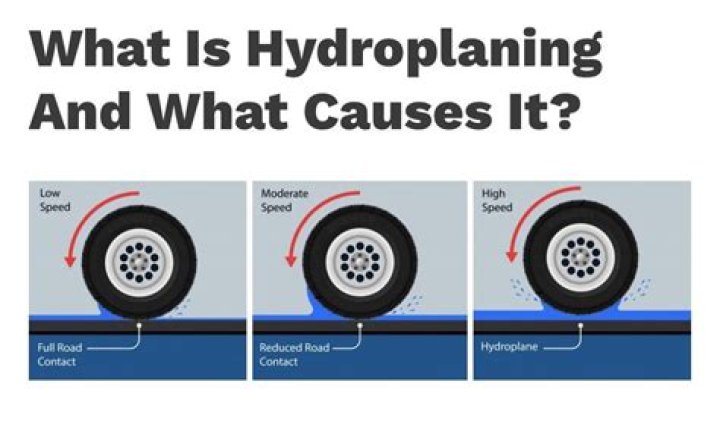
Vehicle speed - as speed increases, wet traction is reduced. Tire tread depth - worn tires have less ability to resist hydroplaning. Water depth - The deeper the water, the quicker you lose traction, but thin layers of water cause hydroplaning, too.
When driving over standing water on the pavement hydroplaning is most likely to occur if you drive with?
Reduce Your Speed: Most automobile safety experts agree that hydroplaning is most likely to occur at speeds greater than thirty-five miles per hour. It is best to drive five to ten miles slower than the speed limit, even slower in heavy rain or windy conditions.
How do you control hydroplaning?
What to do if Your Vehicle Starts to Hydroplane
- Remain calm and slow down. Avoid the natural urge to panic and slam your brakes, which can cause your vehicle to spin completely out of control.
- Pump your brakes. Use a light pumping action on the brake pedal.
- Steer into the skid. ...
- Wait until you regain traction.
How do you get out of hydroplane?
What Do I Do If My Car Hydroplanes?
- Avoid the urge to slam on your brakes and ease your foot off the gas pedal.
- Use a light pumping action on the brake pedal, if needed.
- Turn your steering wheel in the direction your vehicle is going, then turn it back to realign your tires.
How do you stop aquaplaning?
How to avoid aquaplaning
- Check weather conditions. Understand what could lie ahead, especially before a long-distance drive. ...
- Watch your speed. Your tyres have less grip on the road at higher speeds. ...
- Keep your tyres in good condition. ...
- Follow the track. ...
- Smooth driving.
What action should a driver take if the vehicle starts to hydroplane?
If you are in a front wheel drive with or without ABS and traction control or a rear wheel drive with ABS and traction control and you begin to hydroplane, you should look for open space and plan to travel in that direction. Stay lightly on the accelerator and steer gently toward the open space you have identified.
What to do if you hydroplane in the rain?
What to do if your car hydroplanes
- Remain calm and slow down. Avoid the natural urge to slam on your brakes. ...
- Use a light pumping action on the pedal if you need to brake. If you have anti-lock brakes, you can brake normally.
- Once you've regained control of your car, take a minute or two to calm yourself down.
What's the proper sequence for hydroplaning recovery?
To recover from hydroplaning, experts recommend the following: Keep the wheels straight and reduce speed — This allows the tires and the road to re-gain contact. Do not brake or turn — Rather, ease your foot off the gas until you feel the road again.
Does all wheel drive prevent hydroplaning?
Subaru All Wheel Drive (AWD) can pull power away from hydroplaning tires. You will have more control during a tire blow out; the all wheel drive system will pull power away from that wheel, reducing the likelihood of a skid.
Can you hydroplane with good tires?
The best way to handle hydroplaning is to prevent it from happening. Most people intuitively know to avoid puddles, drive slowly and brake gently in wet weather, but what else can you do? First of all, don't drive with worn tires! Maintaining a good tread is essential — more than 5/32nds of an inch is ideal.
What is the best way to prevent skidding on a slippery road surface?
To prevent skidding on slippery surfaces: Drive slowly and stay farther behind the vehicle ahead of you. Slow down as you approach curves and intersections. Avoid fast turns.
...
Skids on Slippery Surfaces
- Ease off the accelerator (gas) pedal.
- Stop braking.
- Turn the steering wheel in the direction of the skid.
On what type of tires would you most likely hydroplane?
A: Hydroplaning is a function of tire footprint, all other things being equal, a tire with a wider footprint will tend to hydroplane more. If the low-profile tire is wider, it will indeed hydroplane more easily. If the tire is low-profile, but has the same tread width, no.
How do you drive on the highway in the rain?
Safety Tips For Driving In The Rain
- Drive A Clean Car In Good Condition. When visibility is limited by wet weather, it's important that your car itself doesn't impede your sight. ...
- Know The Roads. ...
- Switch On Lights, Not Brights. ...
- Slow Down! ...
- Don't Get In Too Deep. ...
- Steer Where You Want To Go. ...
- Hold Off On Unnecessary Trips.
What do you do when skidding on a wet road?
Recover From a Skid - Skids can even happen to the most cautious drivers. If your car does skid, remember not to slam on the brakes, and do not pump the brakes if you have an anti-lock braking system (ABS). Instead apply pressure to the brakes in a firm manner and steer the car in the direction of the skid.
Do heavier cars hydroplane less?
Heavy vehicles are less prone to hydroplaning. Regardless of your tires or what type of vehicle you drive, there are a couple of things you can do to prevent hydroplaning. First, slow down. Speed increases the likelihood of hydroplaning.
At what speed does an average vehicle begin to hydroplane?
40 miles per hour. Explanation Hydroplaning occurs when there is standing water on a roadway.
What are the 4 causes of hydroplaning?
Hydroplaning is caused by a combination of road conditions, vehicle speed, tread depth and vehicle weight. Let's take a closer look at these four factors.
Is hydroplaning my fault?
Is Hydroplaning My Fault? (The Answer Is No!) What would you say is the most dangerous driving weather? You might be surprised to learn that it's not snow or ice, but simply wet pavement. In fact, 70% of weather-related car crashes are a direct result of wet pavement, which can cause your car to skid out of control.
Why is my car sliding in the rain?
Hydroplaning happens when the water in front of your tires builds up faster than your car's weight can push it out of the way. The water pressure causes your car to rise up and slide on a thin layer of water between your tires.
What is the 3 to 6 second rule?
Simply leave 3 seconds worth of room between you and the vehicle you are following. Just watch the vehicle in front of you pass a road sign or other inanimate object on the side of the road and count out “One Massachusetts, Two Massachusetts, Three Massachusetts” before your vehicle passes that same object.